Sign in to ask, answer and view questions.
Warning: This is an automated transcript. It may contain gross inaccuracies.
hi everyone in this lecture I'm going to be going over the reading in more detail to help you understand what the main points are and that remind you of some definitions that you'll be needing for the rest of semester
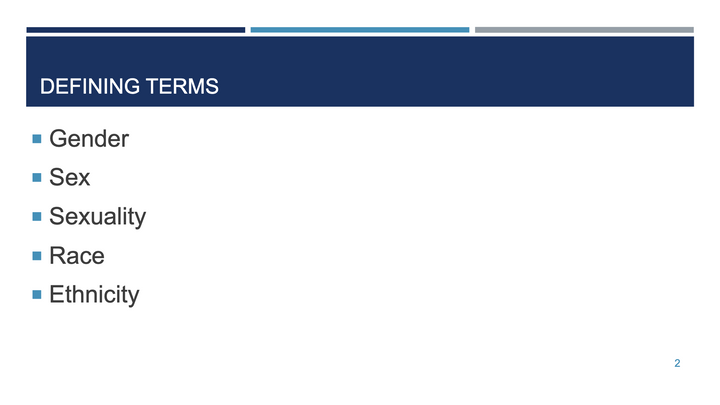
remember that gender refers to the way that we are expected to act within interactions right it's about was socially acceptable for masculinity and femininity now sex is the physical differences based on sexual characteristics and then we put people into sex categories based on the sex characteristics that they are born with.
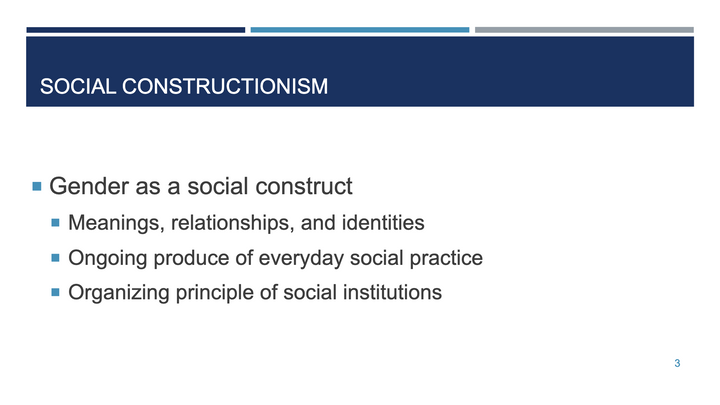
to understand gender and race a social constructs you must first have an understanding of what it means that we collectively agree exist this is an alternative to biological or essential as theories that explain that I'm and II static or a historical this means there are certain facts that change of time across cultures and even within the same Society these things do exist however they do not always me the same things that throughout time and across cultures table gender is an ever-fixed it's not stack how gender is a Define has changed across time and other cultures have different gender ideologies across time as well this means a while maybe more familiar with a to gender system write the gender binary this is not Universal it's just it's just our societies a particular ideas about gender to study gender is a social construct that you start with the idea that our meetings about relationships to do and even our gender identities are socially constructed by Society has created them and they can change at the micro-level gender Stars discuss all genders of ongoing compliment it something that we achieve every day about how we dress now. But this but that this is so Norm for us to do that it's something that most of us have been doing it for so long that we often fail to acknowledge that it is in fact a performance at the micro are at the macro-level gender scholars study how are social institutions are organized by gender by this they mean that gender is a structural part of our social institutions and some jobs are highly gendered type of work like male or female dominated fields
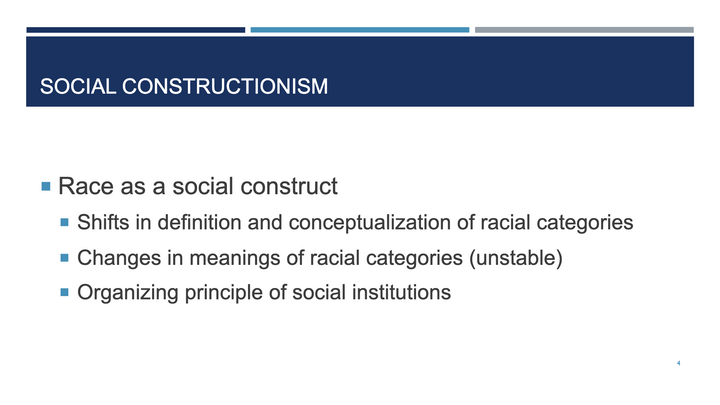
To understand race as socially constructed, one can look back at the shifting definitions of who counts as what race in our past. For example, the reading goes into detail about the shifting definition of who is Black in America through the enslavement of these groups, to the Reconstruction, and Jim Crow. These definitions didn’t always line up even within the same time period in the U.S., let alone having a static definition across time. Our definitions of each racial group are a uniquely American phenomenon. Meaning that race is a social construction, it is not a stable category and has only been explained that way in the past (in biological terms) as a way to exclude and oppress. Again, Race is a way that our society has organized social life, built into our social institutions as a way to attempt to maintain racial boundaries with the intent to exclude and oppress.
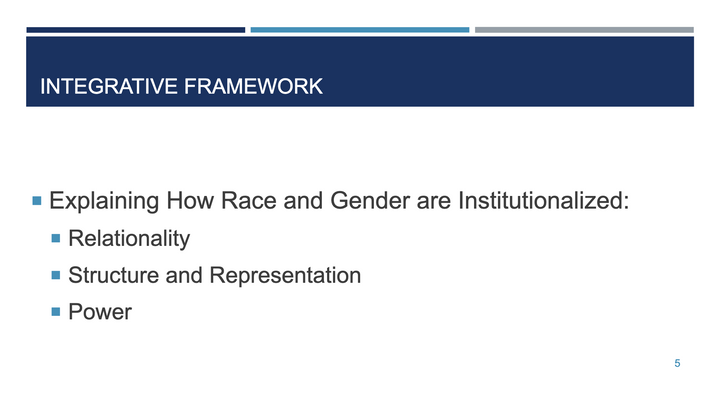
The purpose of this reading is for the author to explain their ideas for a new (at the time) way of thinking about how social constructed categories, particularly race and gender are intertwined. In the past, she explains, at best theories would use an additive model of gender and race, saying something along the lines of having to pick which oppression (race or gender) is more salient at any given time or ranking them with one being more important. This author discusses the problems with understanding oppression in this way and instead argues for an integrative framework. This model, this theory, has three main categories. To understand the way that gender and race systems work in tandem to exclude and oppress, we must understand how these concepts are relational, how they are built into our social structures, and how they maintain power.
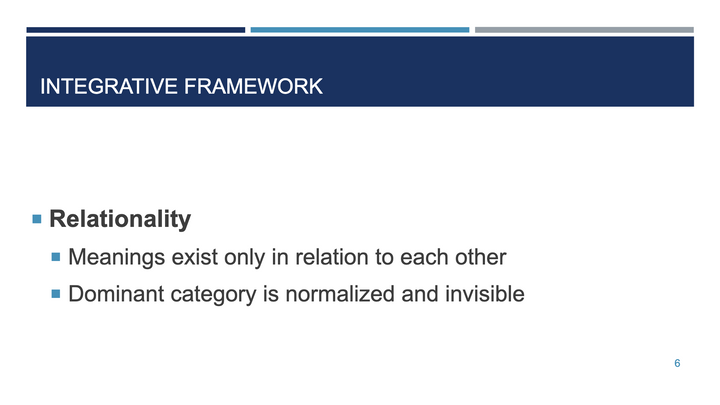
buy relationality the author means that this system write these terms are only understood in relation to each other because of how we have structured our gender system what it means to be masculine is built on what it means to not be some of these are connected being a man is not being a woman the same thing has happened with race and is perhaps even more parents who are shipping definitions of what needs to be black in America we can easily see how it's always been a relation of whiteness multiracial individuals are considered non-white because whiteness was the dominant category whiteness and masculinity have become normalized remain Invisible by this I mean that was in power relationships are considered the default not a particular Viewpoint to be white in the u.s. is to be not racialized even the white is a race that was just part of the privilege that comes from being the social Dominic group
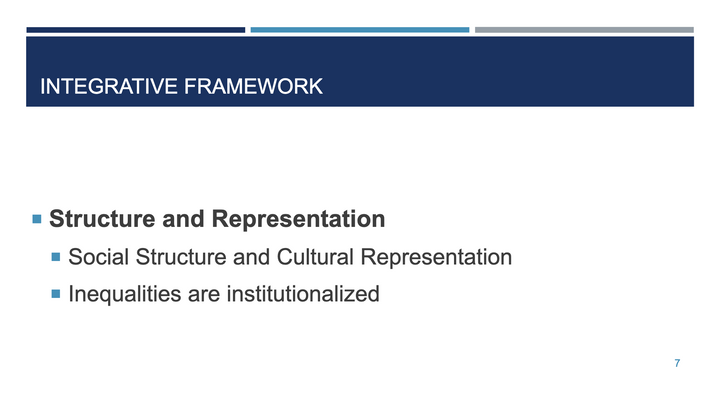
The second key feature of this theory is structure and representation. The author here is referring to the ways that gender and race are representational, meaning that they are distinguished by how they look. These cultural representations have differences and these differences are valid, however these categories are not just about how different groups look or act. There are real social consequences imbedded within these categories. Therefore, the author spends more time here talking about structure. She highlights how race and gender are really systems of race and gender. That these categories have become institutionalized and are maintained and reproduced by our social institutions, not just at the interactional level. Therefore, these inequalities have also become institutions, meaning that race and gender inequality is maintained and reproduced within our major social institutions in the U.S. Examples would include things like the gender pay gap and redlining just to name a couple.
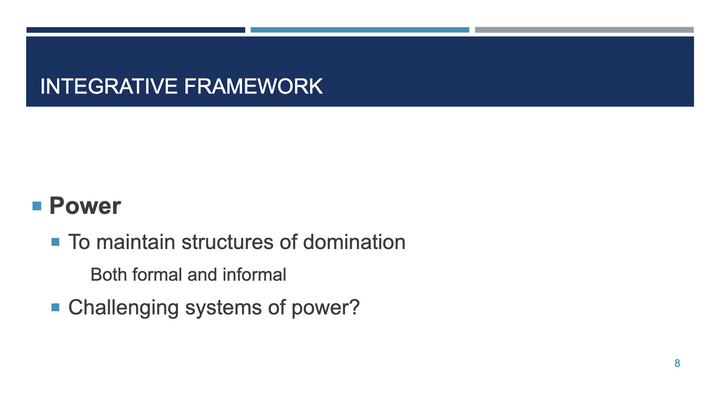
The last of the three major components of this theory is power. The author here focuses on the ways that power exists and is exercised with these systems of inequality. She states that so often this power is ignored or overlooked because it has become so normalized. It is important to speak to this power inequality if there is to be any hope of lessening it or getting rid of it. The power imbedded within our race and gender systems is everywhere. It is in our everyday interactions and within our social institutions. This can make it difficult to pinpoint, to acknowledge, and to dismantle because this power lives in the taken-for-granted assumptions and everyday practices that we do. Therefore challenging this hierarchy will have to come at multiple levels, not just individual level.
in this lecture we've gone over how recent gender are so socially constructed categories are your book talks about this in more detail. The integrative framework does studying social location is of course the main point of the reading the author goes over a little bit about some previous theories and how this one is according her she thinks it's the best and then gives one pretty long example there to explain how she's going to use this Theory including all three of those components make sure to go over and look at that example examples called the race and gender construction of reproductive labor this is where the author explains herself explains this Theory and how it can be put into practice